Zir-e Nakhla Restaurant, from Kish Beach to Tehran (part 5): twelve questions and a key for Arash
This is a story. Zir-e Nakhla and its people are fictional, but any business with a few branches will know their worries. Part 4 ended with a note on the back of an order slip: "If we have five branches, where should our data live?" A year and a few months have passed. Zir-e Nakhla now has branches in Kish, Shiraz, Bandar Abbas, Isfahan and Tehran, and two small rooms above the Tehran branch have become the head office.
Scene 1: Twelve questions in one ticket
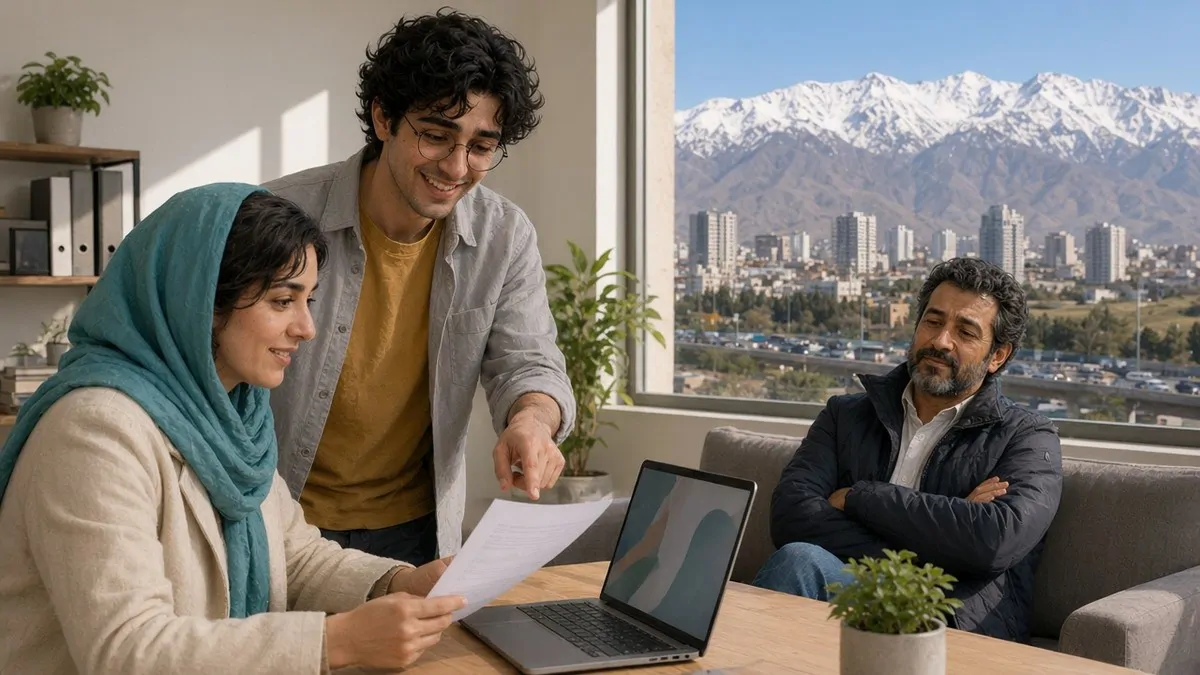
Place: Tehran, Zir-e Nakhla's head office on the top floor of a building in a side street off Valiasr Street, 12 Bahman, morning. Present: Maryam, Arash, Reza.
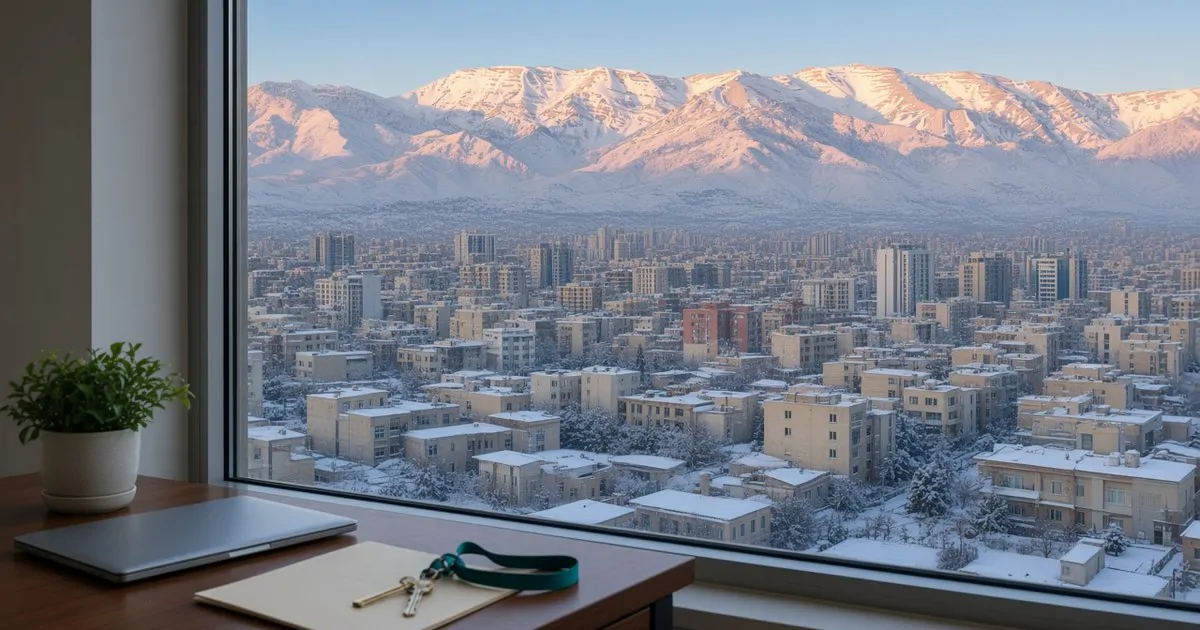
It snowed last night, and from the office window the Alborz is white all the way down. Arash has graduated and is now the head office's IT technician. He still wears the same round glasses; only the mustard t-shirt has become a mustard sweater.
A new ticket has arrived in Sufi Customer Support from Ms Farahani, the events organiser at the Tehran company whose party dinner they served in a villa garden on Kish nearly two years ago. This time the news is bigger: her company wants to give Zir-e Nakhla its staff events in Tehran, Shiraz and Isfahan for a whole year.
There's one condition. Before signing, the company's information security unit has sent twelve questions. Ms Farahani typed them all into the ticket and added: "Sorry, I don't understand these either. But they won't sign without the answers."
Maryam asks the ticket hooshvare for a summary. It sorts the twelve questions into four groups: where the data is, who can see it, what happens with backups, and who handles updates. One question also asks whether, if the customer wants, the data can be kept on dedicated servers inside Iran.
Reza, sitting in his jacket on the sofa by the window, folds his arms.
– Reza: "We're a restaurant, not a bank. Now we have to learn to run servers too?"
– Arash: "Our own server? Brilliant! From tonight I'll..."
– Maryam: "From tonight you'll do nothing. You're one person, and you need to sleep tomorrow night too."
Arash laughs and puts the sheet of questions in front of Maryam. She folds it and picks up the phone.
– Maryam: "First let's ask the people who built this software."
Scene 2: One call, and a bet
Place: the same office, same day, afternoon. Present: Maryam, Arash, Reza; the SufiChain team on the phone.
The call is shorter than Reza expected. The SufiChain team reads the questions and says the way forward is clear: Zir-e Nakhla's workspace, hosted by SufiChain until now, can move with all its data onto the restaurant's own dedicated servers, in a rented rack in a Tehran data centre.
– Reza: "And who does that?"
– Sufi team: "We do. The move, the installation and the setup are all on our team. After that, we can keep handling backups and updates under a commercial support contract. At the end, we hand the servers over to your technician."
Arash, who had been writing a list of night jobs in his head, deflates a little.
– Arash: "So I just take delivery?"
– Maryam: "You take the key. That's not nothing."
The Sufi team suggests the night of 19 Bahman for the move. Maryam looks at the branches' bookings calendars, sees a quiet night, and confirms. Then, with Sufi's communications module, she sends all staff a notification: on the night of the 19th, for a few hours after midnight, the panel will be unavailable.
Reza still isn't convinced.
– Reza: "I bet Arash stays up all night, and in the morning a guest calls asking where their booking went."
– Arash: "And I bet no guest notices a thing. Loser cooks ghalieh mahi."
– Reza: "My mother's ghalieh mahi? Deal."
Scene 3: The morning of 20 Bahman, a key in the cold aisle
Place: a data centre in Tehran, the morning of 20 Bahman. Present: Arash, Mr Nikpour from the SufiChain team. That same morning: Nazanin on Kish, Farzaneh in Shiraz.
At 2 a.m., Reza had called Arash to catch him out. Arash answered half asleep: "Amu, the Sufi team is awake. I'm asleep." And he hung up.
Now it's morning. Arash walks into the data centre's cold aisle in his dark jacket. The fans hum steadily and small green and blue lights blink on the racks. Mr Nikpour from the SufiChain team is waiting; the night's work is done.
Nikpour opens the rack and walks him through it step by step: which server does what, where the backups go, and whom to call about anything. The workspace, with all its users, org units, calendars, folders, tickets and invoices, now lives on Zir-e Nakhla's own servers. Then he hands Arash a handover folder and an access card for the data centre.
– Nikpour: "From today this rack is yours. Backups and updates stay with us under the contract. You just need to know where it is, and tell us if you see anything."
Arash signs in to the panel with his own account and two-step sign-in. The "Shiraz staff documents" folder is still open only to Farzaneh and Maryam. He signs the handover sheet and hangs the card round his neck.
That same morning, Nazanin signs in on Kish and finds yesterday's tickets where she left them. In Shiraz, Farzaneh takes the day's first booking from the site form. No guest calls.
Arash sends Reza a one-word message: "Ghalieh mahi."

Scene 4: Answers to twelve questions
Place: the Tehran office, early Esfand. Present: Maryam, Arash; Ms Farahani in the ticket and on the phone.
The SufiChain team sends Maryam the technical answers. She asks the ticket hooshvare to draft the reply from those notes, and checks it against them sentence by sentence:
Where is the data? On Zir-e Nakhla's own dedicated servers, in a data centre in Tehran.
Who can see it? Only named people; each branch in its own org unit, and managers with two-step sign-in.
Backups? Handled by the support team under a commercial support contract.
Updates? The same team, under the same contract; Zir-e Nakhla's IT technician is kept in the loop.
Arash answers question twelve: "Is your software's code available for review?"
– Arash: "This one's the easiest of all."
The core of Sufi Platform and its comprehensive modules are open source, with the code on Sufi's GitHub. Ms Farahani's security unit can read for itself how the software works, instead of just taking someone's word for it. Pro modules such as Sufi Customer Support and Sufi Finance are commercial, and each has a free licence from the console that suits small and medium companies.
A few days later, Ms Farahani calls.
– Ms Farahani: "My colleague in security said this was the fastest questionnaire anyone answered for them this year. They've signed."
Scene 5: The ghalieh mahi he owed
Place: Zir-e Nakhla's Tehran branch, the same week, night. Present: Reza, Arash, Maryam.
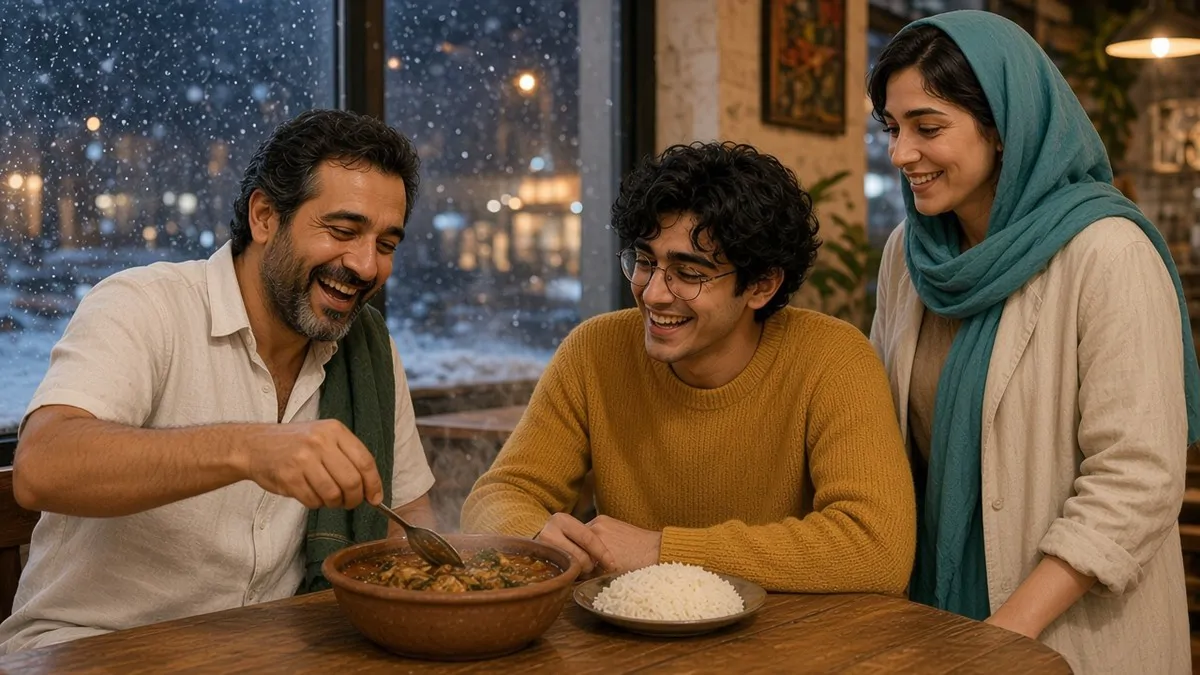
Snow is falling again outside. With the green towel over his shoulder, Reza sets a clay bowl of ghalieh mahi in front of Arash: his mother's recipe from Bushehr.
– Reza: "I lost. But tell me, were you really asleep that night?"
– Arash: "Like a baby, Amu. The server is ours; staying up for it is the contract's job."
Maryam laughs and remembers that a year and a few months ago, this same Arash built a booking page overnight and everything ended up in his personal account. Now he wears the key to a rack in a data centre round his neck, and his only job is to know where it is.
What's next?
Now that the contract is signed, Reza does the sums: one company's events in three cities, five kitchens, and each one cooks ghalieh mahi a little differently. On the back of the same old order slip, under his last question, he writes: "A central kitchen?" In the next part, Zir-e Nakhla sets up a central kitchen, and for a job no off-the-shelf software does quite right, it builds its own module on the open Sufi Platform.