Zir-e Nakhla Restaurant, Kish Beach (part 2): the Nowruz rush
This is a story. "Zir-e Nakhla Restaurant" and its people are fictional, but every small business owner will know their worries. In part 1, we saw Maryam and Reza start small with a hosted workspace. Now Nowruz has arrived.
Scene 1: Nowruz arrives, and one question a hundred times
Setting: Zir-e Nakhla's terrace, the second day of the Persian new year (Farvardin 2), at sunset. Present: Maryam, Reza, Hassan the cook, Nazanin the cashier, guests.
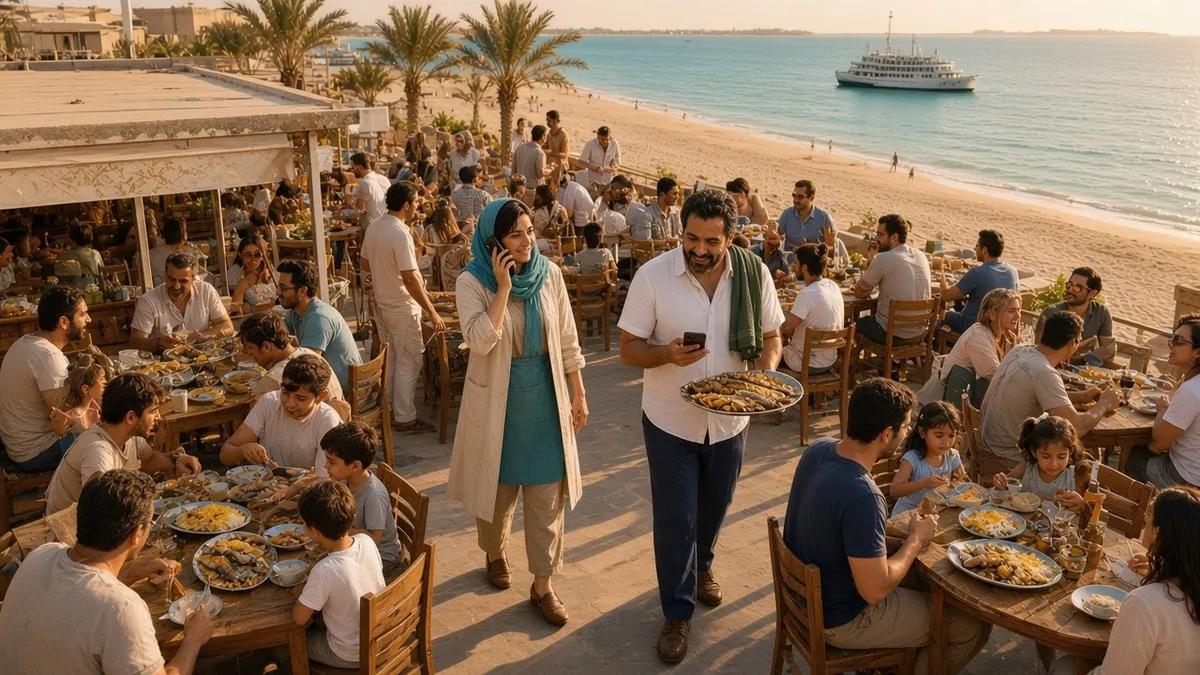
When Nowruz comes, Kish fills with travellers. Flights are full, passenger ferries arrive from Charak port one after another, and many people bring their cars across on landing craft. The beaches, the parks and the cycle path around the island are busy, and at sunset everyone is looking for a table facing the sea.
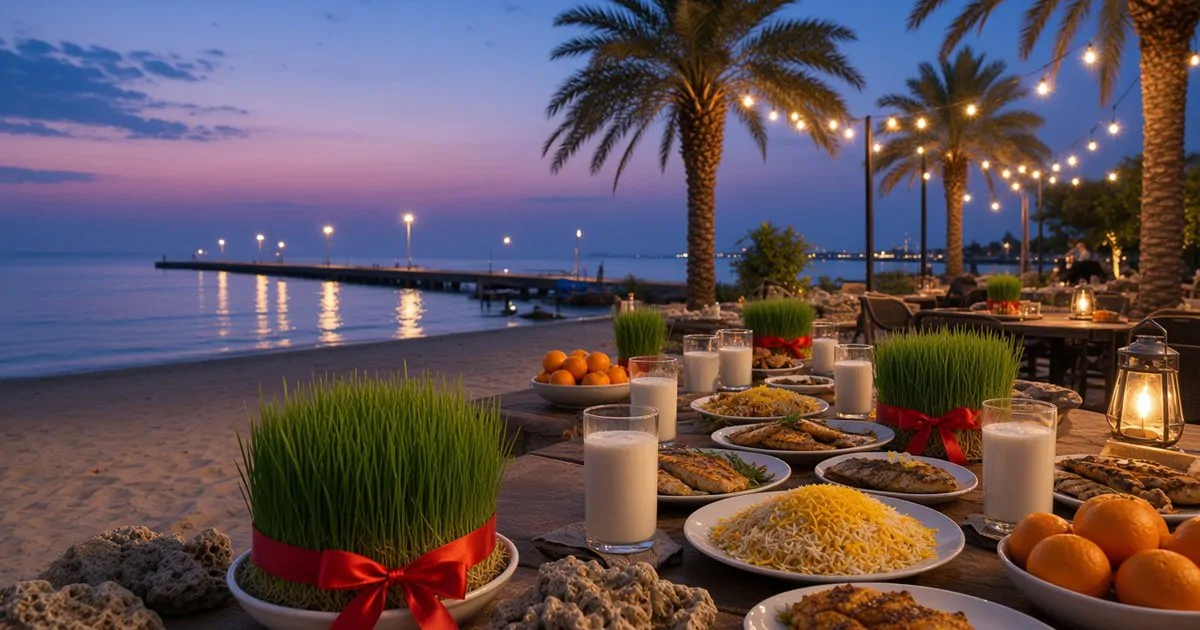
Zir-e Nakhla's terrace is full from six. There's a pot of Nowruz sabzeh on the counter and a dish of sweets beside it. The restaurant phone rings, and Maryam's mobile won't stop buzzing with messages.
Maryam (on the phone): "Yes, the public car park is behind the row of shops... Yes, we have a kids' menu... No, madam, the ghalieh mahi is spicy, but we have plain grilled fish for children."
The next message is the same question: "Do you have parking?" Then: "Where can we lock our bikes?" Then: "My daughter is allergic to peanuts. Is there anything she can eat?"
Reza comes out of the kitchen, towel over his shoulder, phone in hand.
Reza: "Maryam, look what this man wrote! Under our photo on the map: 'We waited forty minutes for a table. Never again.' We always seat people on time!"
Maryam: "How many times have people asked where the parking is tonight? Ten? I can't keep up with answering everyone, let alone him."
Reza: "Then I'll answer him myself!"
Maryam: "Reza... not now. Tomorrow morning, together."
Nazanin calls from behind the till: "A family's here. They say they have a booking, but their name isn't on the calendar."
Scene 2: The night Arash's booking page went down
Setting: by the terrace's wooden fence, the same night, nine o'clock. Present: Maryam, Reza, two travelling families, and Arash on a video call from Tehran.
Two families stand by the fence, both holding up their phones. One booked through the form on the restaurant's website, and it's on the bookings calendar. The other booked through Arash's old booking page, the one he built overnight with an AI chatbot.
That page had never quite been switched off. Its address was still on the restaurant's Instagram page and on the cards that a few hotel receptions handed to guests. Arash had said: "Let's keep it till the end of the season, it can't hurt."
Maryam finds the second family a table by the counter and brings them tea. Then she video-calls Arash, who is spending the holidays with his family in Tehran.
Maryam: "Arash, your booking page won't open. A family booked through it and we had no idea. How many others booked there?"
Arash: "Hang on... it won't open for me either. I think that free service shuts the page when it gets too many visits."
Maryam: "Where are its bookings? Just tell me where they are, and I'll call them one by one."
Arash (scratching his head): "In my own account on that service... I set it up with my university email. I'll have to see if I can get the list out."
Reza (behind Maryam): "So right now nobody knows who has a table tomorrow night?"
Arash (embarrassed): "Honestly... no, uncle."
Reza: "So it's like a fridge whose only key is with one person, and that person has gone on holiday."
Arash searched until midnight and finally got a list of bookings out. The next morning Nazanin called each guest, and Maryam entered the bookings one by one on the restaurant's bookings calendar. Two families couldn't be found; their numbers were incomplete in the list.
That night Maryam made up her mind: from now on, one way to book. The link on the Instagram page was changed to the booking page on their own website, and the hotels got new cards with a short link to the same form. Every booking lands straight on the bookings calendar and stays in the restaurant's own workspace, not in someone's personal account.
You can build a tool in one night. The real question is this: on the busiest night of the year, when that tool stops working, who knows where its data is, and who is responsible for fixing it?
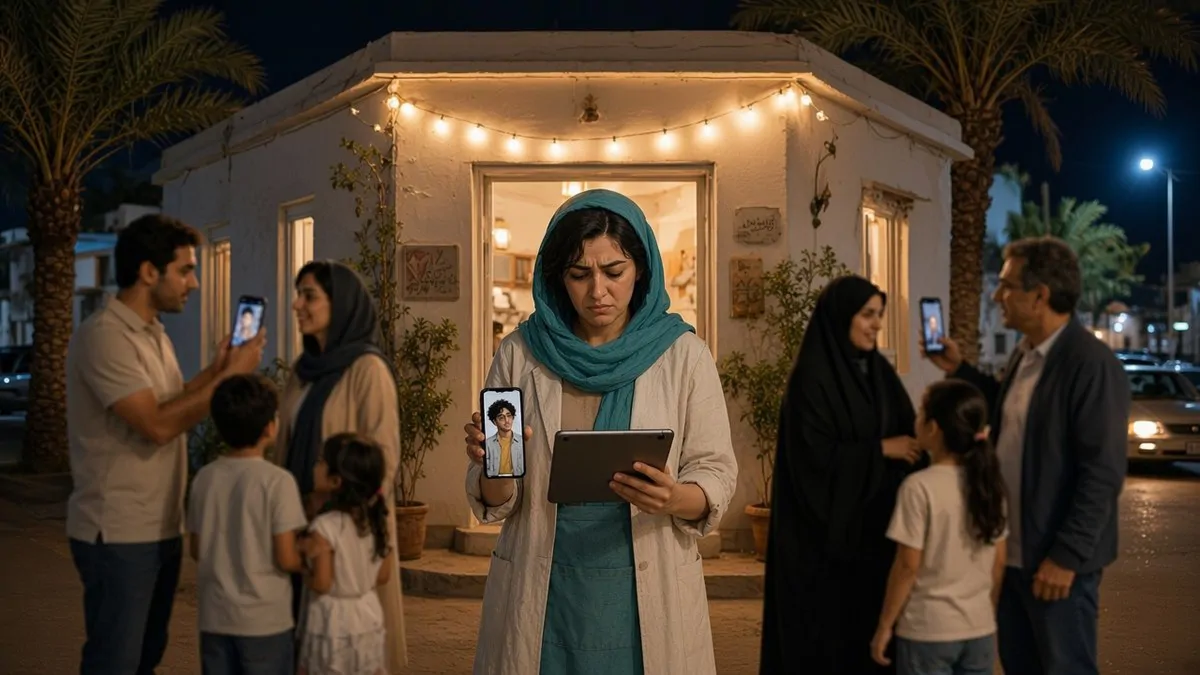
Scene 3: Morning, three articles and a live chat
Setting: the sea-facing terrace, the morning of Farvardin 3, before opening. Present: Maryam, Reza, then Hassan the cook.
Maryam sits at her laptop with a glass of tea. Since last night she knows most messages are the same few questions. She decides to write the answers once, properly.
- The restaurant's help center. With SufiHelpDesk, the restaurant has a help center on its website: a page where guests search and find answers themselves.
- A hooshvare as her article writer. In the article editor, Maryam typed: "Write a short guide to parking and places to lock bikes near the restaurant." The hooshvare (Sufi's AI helper) drafted one. Maryam corrected the exact location of the car park and approved it. The "Kids' menu" and "Food allergies" articles were written the same way. Hassan, the cook, read the allergy draft line by line and corrected two points: "The tartare sauce has egg in it, add that too." A short article on booking a table during Nowruz was added as well. The hooshvare suggests; what gets published is what people have approved.
- Live chat on the website. There's now a chat window in the corner of the site's pages. The chat hooshvare answers first, using only those published articles. If a question falls outside the articles, or a guest wants to talk to a person, it hands the chat over to Maryam or Nazanin.
- The hooshvare's instruction. Maryam wrote a short instruction for the chat hooshvare: "Answer politely and briefly. Use only the help articles. Never make promises about food allergies; hand the chat to one of us."
At eleven, the first chat of the day arrives. Reza stands behind Maryam, watching the screen.
Guest: Hi, we want to come tonight with two small children. Do you have food for kids? What about parking?
Hooshvare: Hi, welcome! Yes, the kids' menu has plain grilled fish, chicken and rice, and chips. The public car park is behind the row of beachfront shops, and it fills up early on Nowruz evenings, so come a little early if you can. Details are in the "Kids' menu" and "Parking and bikes" articles in the help center.
Guest: My son is allergic to shrimp. Does your ghalieh mahi have shrimp in it?
Hooshvare: For food allergies, it's best to talk to my colleague directly so she can check with the kitchen. I'm handing this chat to Maryam.
Maryam: Hi, this is Maryam. Our ghalieh mahi has no shrimp, but the kitchen does cook shrimp too. When you book, write "shrimp allergy" and we'll prepare your son's food separately, in separate dishes.
Reza: "That's the same answer you gave ten times on the phone."
Maryam: "Yes. Except this time I didn't give it ten times."
Every question the hooshvare hands to a person shows Maryam which article is missing. By noon, a "Holiday opening hours" article had been added too.
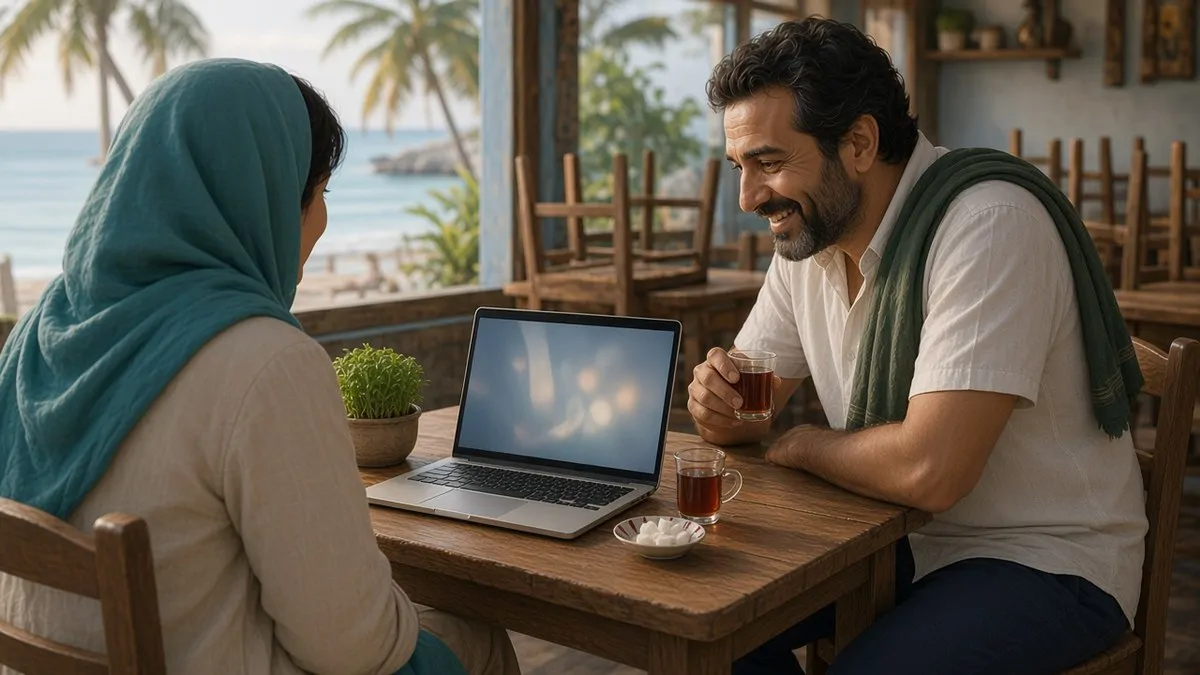
Scene 4: Complaints, tickets and the Nowruz shift group
Setting: the counter, midday on Farvardin 3. Present: Maryam, Reza, Nazanin, Hassan.
Now it's the angry man's turn. Maryam got his number from Nazanin yesterday and called him this morning. Mr Salehi picked up and told her what had gone wrong. From what he said, Maryam opened a ticket in SufiHelpDesk.
Guests can also log a complaint or request themselves from "My tickets" on the website and follow where it's got to. During Nowruz, every complaint that comes in by phone or chat becomes a ticket, so none gets buried under the others.
- Priority. Mr Salehi's complaint got "high" priority. A message from a woman who had left her sunglasses on a table got "normal". A suggestion that the music be a little quieter got "low".
- A summary from the hooshvare. Maryam asked for a summary of Mr Salehi's ticket. The ticket hooshvare wrote: "The guest booked through the old booking page. The booking wasn't on the calendar, and they waited forty minutes. The children got tired. They liked the food. What upset them most was that nobody explained what had happened."
- A draft reply. The hooshvare suggested a short, warm reply. Maryam removed one sentence, because it made a promise she wasn't sure she could keep, and added one of her own. Then she sent it. The ticket moved to "waiting for customer".
- Passed to the kitchen. The ticket from the guest whose son is allergic to shrimp was referred to the kitchen team, so Hassan could check and confirm it himself.
Reza reads the summary.
Reza: "So it wasn't the kitchen's fault. It was that old page."
Maryam: "And ours, for not explaining. Now we have."
The next day Mr Salehi replied: "Thanks for following up. We'll come back on Sizdah Bedar." Maryam closed the ticket. That day Reza also left replying to reviews on the map to Maryam.
Team chat. Meanwhile, the team's own messages no longer get lost in anyone's personal messenger. In team chat, in SufiCom, Maryam has made a group called "Nowruz shift" with Reza, Hassan and Nazanin.
Maryam (in the group): "Tonight, table 6, eight o'clock: shrimp allergy. Separate food, separate dishes."
Hassan (in the group): "Seen. I'll cook their grilled fish first."
Nazanin (in the group): "We're out of ice. Can someone call the supplier?"
Reza (in the group): "I will."
Reza (to Maryam, laughing): "Better than shouting across the kitchen. And nobody can say they didn't hear."
In the busiest week of the year, the restaurant was still running on the same small hosted workspace. They hadn't bought a server or hired anyone to look after one.
Scene 5: Arash comes back, "open source" in plain words
Setting: the corner table, Farvardin 14, late afternoon. Present: Arash, Maryam, Reza.
Arash drops by before heading back to university, a little sheepish.
Arash: "Zan-Amu, I've switched my page off for good. But I still want to build something."
Maryam: "Go ahead. Just build it on something that stays ours."
The core of Sufi Platform and its main modules are open source: https://github.com/sufi-chain For a restaurant, that means:
- Your data is yours. Bookings, articles and tickets live in the restaurant's own workspace, not in one person's personal account.
- You aren't locked in to one company. The recipe for the software isn't hidden. If you ever want to move elsewhere, you don't depend on a secret.
- Any developer can build on it. Arash, or anyone you hire later, can read the code and add something for you on top of it.
Arash: "So next time I build something, I build it on something someone looks after."
Reza: "Like cooking in a real restaurant kitchen, not on a camping stove on the beach."
What's next?
Nowruz is over, and Zir-e Nakhla now takes orders for parties and birthday dinners, orders that need a deposit. In the next part, we'll see how the restaurant sorts out online payment, invoices and its order notes.